

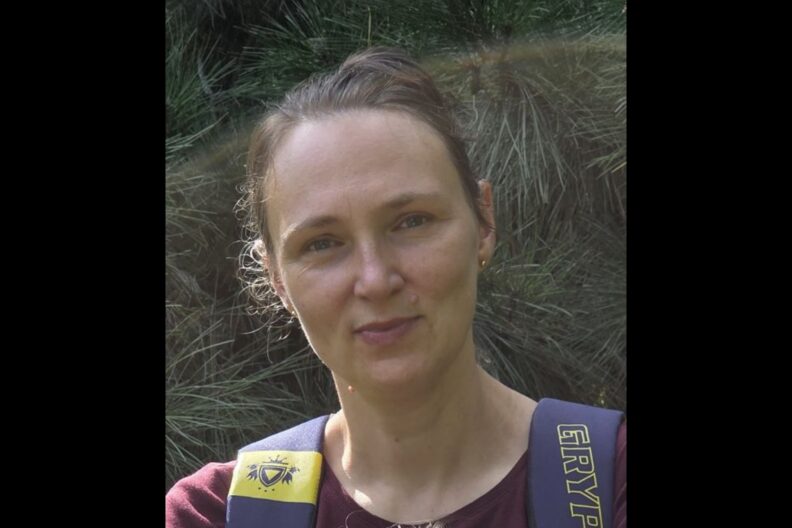
Dr Litka Milian
“Students quite often come to me and say
‘I just want to be seen as a person. I don’t want to be seen through my disability’”
Written by Derek Main
In chemistry, the challenge is not always the science itself. For some students, it is getting through long hours in the lab, keeping up with deadlines, and managing their health at the same time. That is the question behind Dr Litka Milian’s EDI+ Fellowship.
An Associate Professor in Chemistry at Durham University, Dr Milian was drawn to the project by something she had repeatedly seen in her student-facing work: capable students struggling not because they lacked ability, but because the conditions of their learning were harder to navigate than many people realised.
“There’s something I wanted to explore a little bit more,” she says. “I really like our students, and I really want them to succeed.”
Testing support under lab conditions
Her early research reveals a problem that is easy to overlook. The issue is not simply whether support exists. It is whether students can depend on it in practice, without having to keep chasing, explaining and managing it themselves.
“If you’ve got a health condition, you need to see a doctor, make appointments,” Dr Milian says. “That’s on top of everything else. You’re trying to get a degree while managing your health.”
Students described that burden in practical terms: appointments, paperwork, adjustments, conserving energy, repeating explanations, and deciding when to push through and when to stop. One referred to “disabled admin”- a phrase that capture the hidden labour around studying with a disability.
That labour is often most visible in the lab. Long sessions, prolonged standing, background noise, physical tasks and fixed timings all surfaced as barriers. What looks manageable on a timetable can feel very different in practice. One student described labs as “a gauntlet of pain”.
These experiences point to something more fundamental: disability does not only sit at the edges of university life. It can shape the effort required for ordinary participation, such as attending lectures, concentrating, writing, completing practical work, keeping pace when symptoms are unpredictable, or learning from poor recordings and incomplete materials.
Out of equilibrium
Dr Milian’s project does not tell a simple story of institutional failure. Many students spoke positively about the support they had received. Central disability services were often valued, and both colleges and the Chemistry Department were praised for their kindness and responsiveness.
The issue was not that support was missing. It was that it did not always hold together. What was set out formally was not always felt in day-to-day teaching and assessment. Some barriers also sat outside formal plans altogether: lab set-ups that did not work in practice, poor-quality recordings, uncertainty about where to go for help, and the repeated need to explain and advocate for themselves.
“Students quite often come to me and say, ‘I just want to be seen as a person. I don’t want to be seen through my disability,” Dr Milian says.
That gets to the heart of the fellowship. Students were not asking for lower expectations or special treatment. They wanted to be recognised as capable, with their circumstances understood and taken seriously. For some, that was made harder by invisible conditions, the discomfort of asking for help, or the sense that adjustments were seen as an advantage rather than a way of making study fairer.
Beyond controlled conditions
For Dr Milian, this is where culture matters as much as formal provision.
“The policies, the support is very general, but there will be people who kind of fall out of the zone,” she says. “You can’t just have one policy, and it’s going to help.”
The changes students point to are often practical: clearer standards for recordings and teaching materials, better communication, greater awareness among staff and students, more flexibility in assessment where possible, regular check-ins, and more consistent delivery of agreed adjustments.
“But it’s not all about systems and policies,” Dr Milian says. “At a human level, it’s about reminding yourself to ask, to listen, and to make it easier for students to say what they need before problems build. The majority of help is the willingness to help.”
Making support work
She is careful not to overstate what the work can claim. It is not a neat answer, but ongoing work shaped through continued conversations with students and a developing understanding of how these experiences may relate to outcomes, including an awarding gap that remains under investigation. What it offers is not resolution but clarity: a clearer view of where pressure sits, and the extra effort required not just to succeed, but to participate on fair terms.
“I don’t know the fixes,” Dr Milian says. “But there are definitely ways to open the door a bit wider, make it easier for them.”